


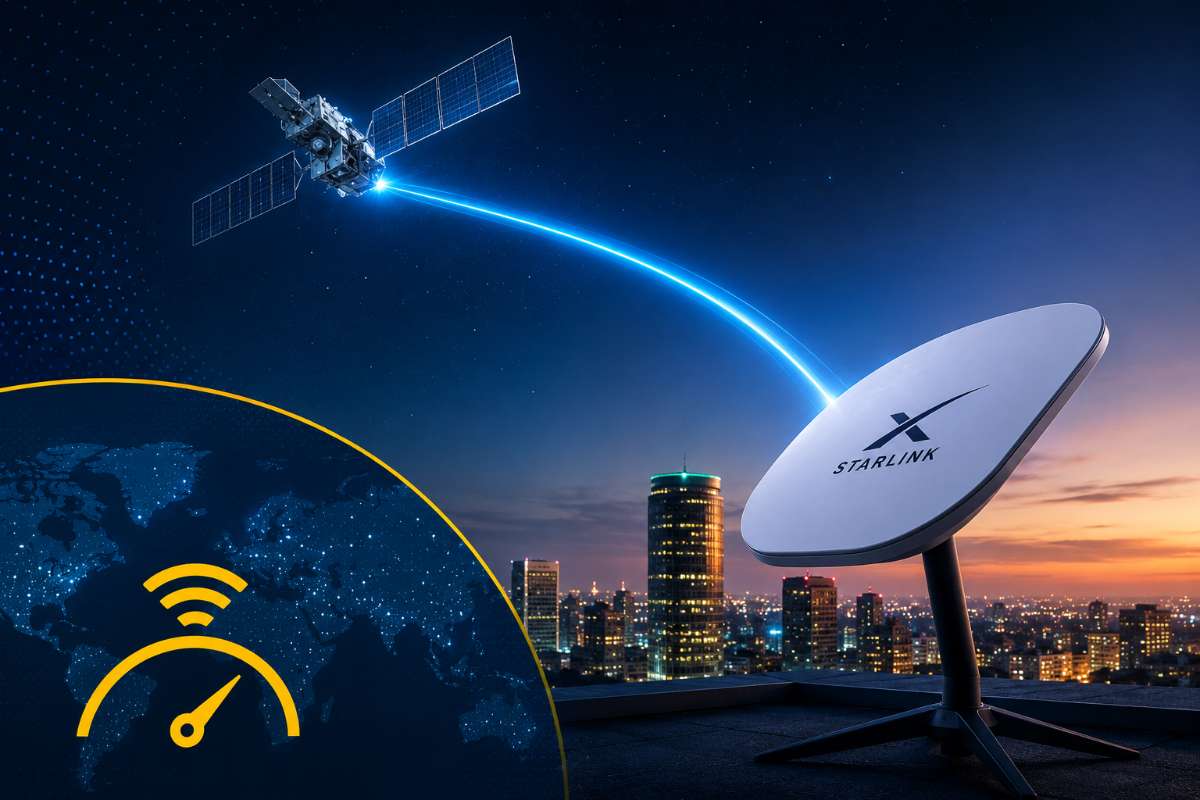
For many Starlink users in Harare, the service has been a game changer.
It brought high-speed internet to homes and businesses that previously struggled with unreliable connections, making it easier to work remotely, stream content, attend online classes, and run businesses online.
However, as Starlink's popularity has grown in Zimbabwe, some users have started noticing something that was almost unheard of when the service first launched locally: slower speeds during certain times of the day.
If you have experienced Starlink slowing down between late morning and afternoon, you are not alone. The issue is commonly linked to network congestion, where increasing numbers of users are sharing the available capacity in a particular area.
The good news is that SpaceX appears to be preparing a major upgrade that could significantly improve the situation.
A New Generation Of Starlink Satellites
This week, SpaceX revealed more details about its upcoming third-generation Starlink satellites, commonly known as V3 satellites.
According to information shared by SpaceX, these satellites are expected to provide dramatically more capacity than the satellites currently serving customers.
The company says each V3 satellite will deliver more than ten times the download capacity and more than twenty times the upload capacity of the satellites currently serving most Starlink users. To put that into perspective, SpaceX says a single V3 satellite will be capable of providing over 1 terabit per second (Tbps) of download capacity and more than 200 gigabits per second (Gbps) of upload capacity. That is enough bandwidth to support thousands of additional users simultaneously, helping reduce congestion and maintain higher speeds even during busy periods.
For users, this matters because internet congestion is ultimately a capacity problem. The more capacity available in the network, the more customers can enjoy fast speeds at the same time.
Why Harare Users Should Care
Harare has become one of Zimbabwe's biggest Starlink markets.
As more households and businesses sign up for the service, the demand placed on the network continues to grow. While Starlink remains one of the fastest internet options available in Zimbabwe, increased demand can sometimes affect performance during busy periods.
The arrival of V3 satellites could help address this challenge.
With significantly more bandwidth available, Starlink should be able to support more users while maintaining higher speeds and more consistent performance.
Good News For Existing Customers
One of the most encouraging aspects of this upgrade is that existing customers will not need to do anything to benefit from it.
The improvements happen in space rather than inside the home. As new satellites are added to the Starlink constellation, users should automatically benefit from the increased capacity.
That means the dish currently sitting on a rooftop in Harare today could eventually deliver better performance simply because the network above it has become more powerful.
Looking Ahead
Starlink's growth in Zimbabwe has been remarkable. What started as a service used mainly by technology enthusiasts has quickly become a mainstream internet option for households, small businesses, schools, and organisations across the country.
With that growth has come increased pressure on the network.
The introduction of V3 satellites suggests SpaceX is already planning for the next stage of expansion. If the company delivers on its promises, Harare users could see the return of the ultra-fast Starlink experience many enjoyed when the service first arrived.
For now, the satellites are still on the way. But for Zimbabwean Starlink customers hoping for faster and more consistent internet speeds, there is finally reason to be optimistic.





Commenting is currently turned off.