


For the past few weeks, I have been using NetOne mobile data as a backup internet connection. What started as a backup plan is now making me seriously consider whether it deserves to become my primary connection.
My main internet service is Starlink. When it works well, it is fantastic. Downloads are fast, streaming is smooth, and the unlimited data offering remains one of its biggest advantages. However, anyone using Starlink in Harare will probably tell you that things have not been as consistent lately.
Over the past few months, I have noticed speeds dropping significantly during business hours, particularly between 10am and 4pm. At times the connection becomes frustratingly slow and, in some cases, almost unusable. The likely culprit is congestion as more households and businesses continue to join the network.
While looking for a solution, I kept hearing people say that NetOne's 4G network had improved dramatically. Naturally, I was skeptical. Zimbabweans have heard plenty of claims about mobile internet speeds over the years.
It turns out the reports were not exaggerated.
My experience with NetOne's data network has been surprisingly positive. Web pages load quickly, YouTube videos play without constant buffering, and social media platforms such as Instagram and TikTok feel responsive. The network simply feels fast.
Whenever my Starlink connection begins slowing down, I buy NetOne's $1 Value Bundle, which gives 1GB of data. That is usually enough to keep me productive while I continue working.
In fact, the biggest problem with the bundle is that you can finish it surprisingly quickly because the speeds make it tempting to stream high-quality videos and download files without thinking twice.
The bundle can be purchased by dialing:
*379# ? USD Bundles ? Promotions ? Value Bundle $1 ? Buy For Self/Other ? Confirm
One thing to note is that the bundle expires at midnight regardless of when you buy it. However, NetOne allows customers to purchase the bundle multiple times per day if they need additional data.
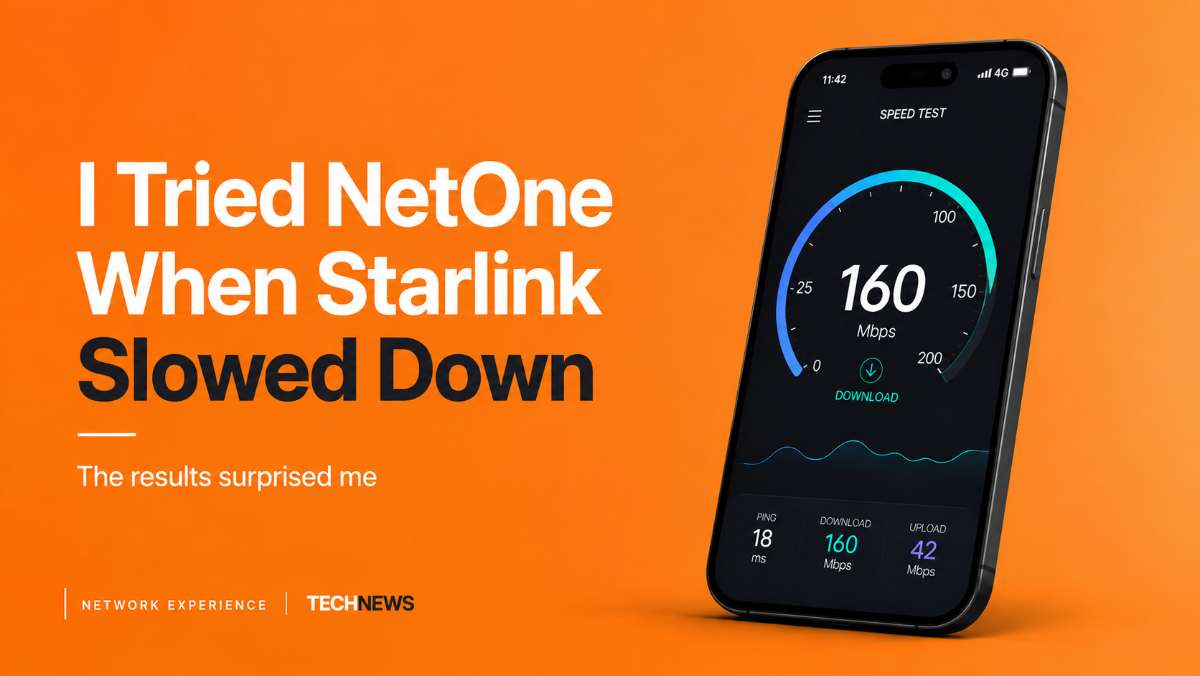
While writing this article, I conducted a speed test and recorded download speeds of up to 160Mbps. Naturally, speeds vary depending on location, network load, and device capabilities. However, across several areas of Harare where I have tested the service, the performance has been consistently impressive.

The real question is whether NetOne can maintain these speeds as more users discover the network.
A popular theory circulating among internet users is that NetOne currently benefits from having fewer subscribers than its biggest competitor. According to recent sector statistics published by the Postal and Telecommunications Regulatory Authority of Zimbabwe (POTRAZ), NetOne has around four million subscribers while Econet serves roughly twelve million.
That gap helps explain why Econet users frequently complain about congestion, particularly in densely populated urban areas. Fewer users competing for network resources can often translate into better speeds and a more responsive experience.
The challenge for NetOne will be maintaining service quality as customer numbers grow. If more Zimbabweans migrate to the network seeking faster internet, congestion could eventually become an issue there as well. At the same time, the movement of subscribers away from competing networks could help ease pressure elsewhere.
It is a classic seesaw effect.
For now, however, NetOne appears to have found itself in a sweet spot. The network is delivering the kind of speeds many Zimbabweans have been hoping for, and at a price point that makes it attractive as either a primary connection or a reliable backup.
I genuinely hope the company can sustain this momentum because competition is ultimately good for consumers. The stronger NetOne becomes, the more pressure there is on every internet provider in Zimbabwe to improve their services.
And if my recent experience is anything to go by, NetOne's mobile data network is no longer just an emergency backup option. It is becoming a serious contender.





Commenting is currently turned off.