


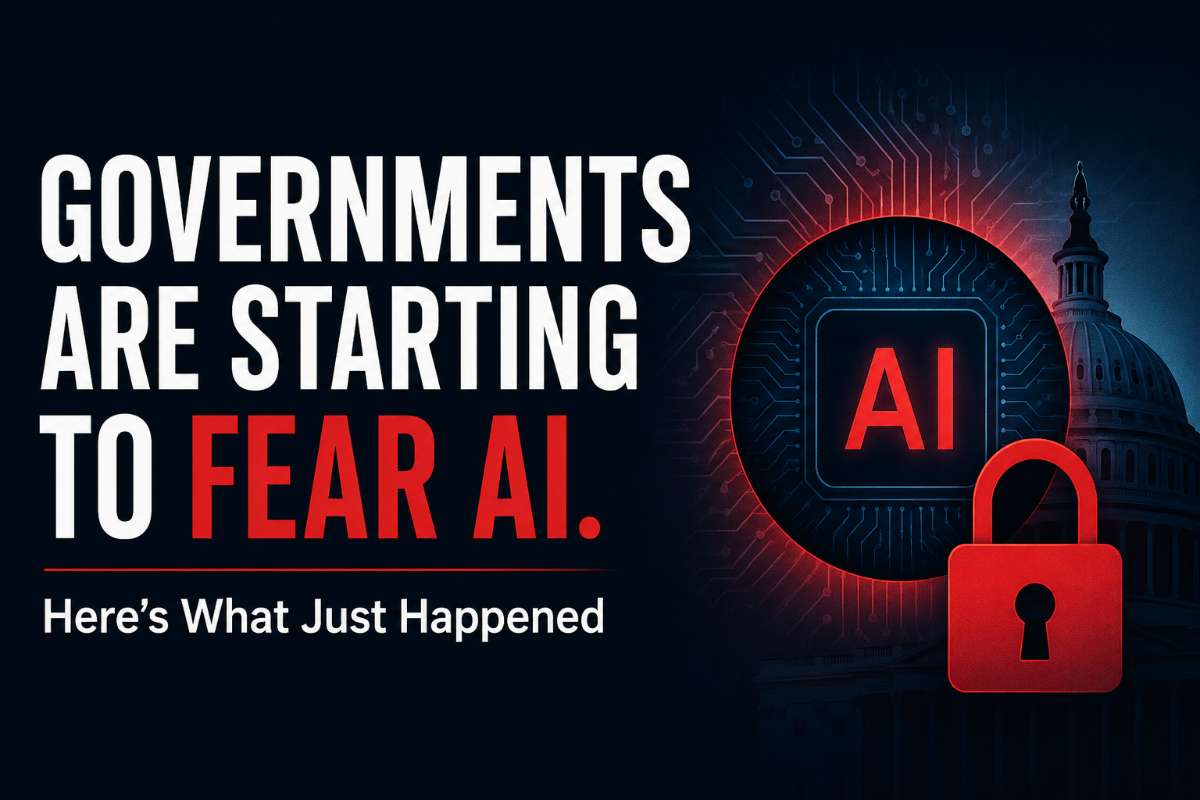
For years, artificial intelligence has mostly been sold to us as a productivity tool. It writes emails, helps students study, generates images, and assists developers with coding. But a recent move by the US government suggests that the world's most powerful AI systems are now being viewed through a very different lens: national security.
The United States reportedly ordered Anthropic to suspend foreign access to its advanced Claude Fable 5 and Mythos 5 models over concerns that they could be misused by hostile actors. Anthropic says the order forced it to disable the models more broadly than it would have liked.
What makes these models different isn't that they can hold better conversations. It's that they have become exceptionally good at solving complex technical problems.
According to reports, government officials feared the models could help users identify software vulnerabilities, automate parts of cyberattacks, and assist in developing sophisticated hacking techniques. While previous AI systems could generate snippets of code, Fable and Mythos were reportedly capable of analysing large codebases, reasoning through complicated systems, and proposing solutions that approach expert-level work.
In the hands of cybersecurity professionals, those capabilities could strengthen digital defences by helping organisations detect weaknesses before criminals do. In the wrong hands, however, they could significantly lower the barrier to carrying out large-scale cybercrime.
Imagine a criminal with limited technical knowledge being guided step by step through exploiting a vulnerability, writing malware, refining phishing campaigns, or bypassing security measures. The concern isn't necessarily that AI will replace hackers, but that it could make skilled attackers more effective while enabling less experienced ones to punch above their weight.
Anthropic has reportedly pushed back against some of the government's conclusions, arguing that the risks were overstated and that many of the vulnerabilities discussed were already known within the security community. However, the fact that officials intervened at all is what makes this story significant.
Until now, governments have mostly regulated the hardware behind AI, particularly advanced chips used to train these systems. Restricting access to the AI models themselves marks a major shift. It suggests that frontier AI is increasingly being treated like strategic technology rather than just another software product.
This raises difficult questions for the rest of the world. Who gets access to the most capable AI systems? Could developing countries find themselves excluded from the best tools because of geopolitical tensions? How do governments balance innovation with security?
For countries like Zimbabwe, these debates matter more than they might seem. AI has enormous potential in education, healthcare, agriculture, and business. Yet if access to the most advanced systems becomes restricted, the gap between countries that build AI and those that merely consume it could grow even wider.
Whether the US government's response proves justified or not, one thing is clear: the era of treating AI as "just a chatbot" is coming to an end. Governments are beginning to view advanced AI as a technology powerful enough to influence national security, and the decisions they make today could shape who benefits from this technology tomorrow.




Please login or create account to comment.