


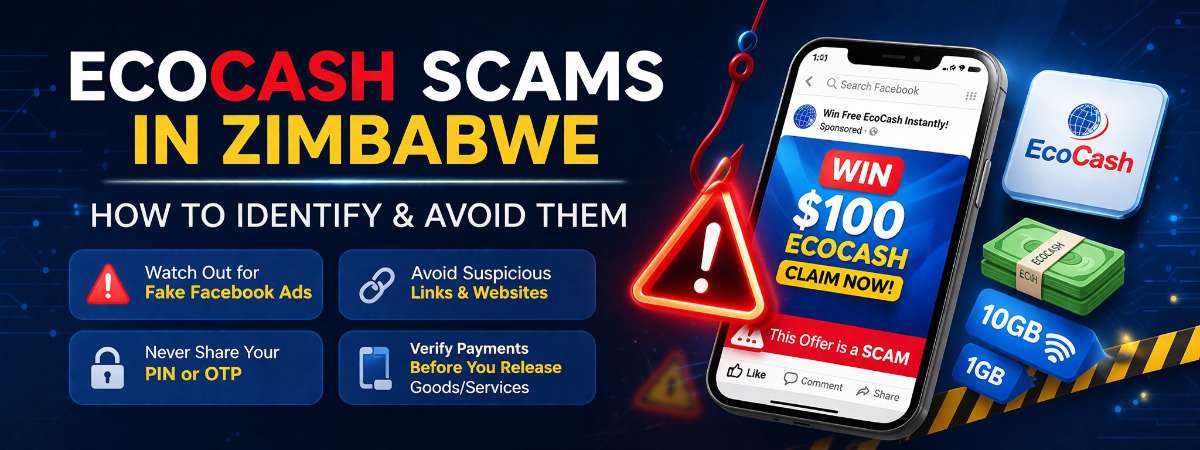
If you’ve spent even a few minutes on Facebook recently, chances are you’ve come across them. Flashy adverts promising “free EcoCash,” unbelievably cheap data bundles, or instant loans with no paperwork. They look polished, sometimes even using familiar branding. And because they’re often sponsored posts, they carry a sense of legitimacy that makes them easy to trust.
But behind many of these adverts is a growing scam economy quietly targeting Zimbabweans and it’s working.
Across the country, reports of mobile money fraud have been rising, with EcoCash users increasingly becoming the main target. What makes this wave of scams particularly dangerous is that the system itself is not being hacked. Instead, scammers are manipulating people using urgency, excitement, and deception to get access to accounts.
One of the most common entry points is through Facebook ads.
The Facebook Ad Trap
Scammers are now paying to promote posts that advertise deals that feel almost impossible to ignore. Offers like “Get $100 EcoCash loan instantly” or “Buy 10GB for just $1” are designed to trigger quick reactions. In a country where data is expensive and cash is tight, these offers hit exactly where it hurts.
Clicking on these ads usually takes you to a website that looks convincing enough. It may carry logos, brand colours, and even fake testimonials. From there, users are prompted to enter their phone number or “log in” to claim the offer.
That’s where the trap is set.
Once you enter your number, scammers initiate a real login attempt. You receive a one-time password (OTP) on your phone. Shortly after, someone may call you pretending to be from support, asking you to confirm the code so they can “complete your transaction.” The moment you share that code, you’ve handed over control of your wallet.
Why So Many People Are Falling for It
These scams are not random. They are carefully designed around everyday Zimbabwean realities.
Data is expensive, so a cheap data deal feels believable. Cash shortages make free money offers tempting. And the use of sponsored ads creates an illusion of credibility. Many people assume that if something is promoted on Facebook, it must have been verified.
But platforms like Meta do not always catch these scams in time. Fraudsters can run ads long enough to reach thousands before they are taken down and by then, the damage is already done.
There is also a growing layer of social engineering involved. Some scams spread through WhatsApp groups or are shared by friends who unknowingly clicked the same links. That peer-to-peer spread makes the scam feel even more trustworthy.
Other Tactics to Watch Out For
While fake ads are leading the charge, they are not the only method being used.
Some scammers impersonate buyers, especially targeting small businesses. They send fake EcoCash payment confirmations sometimes screenshots, sometimes manipulated SMS messages and walk away with goods before the seller realises no money was received.
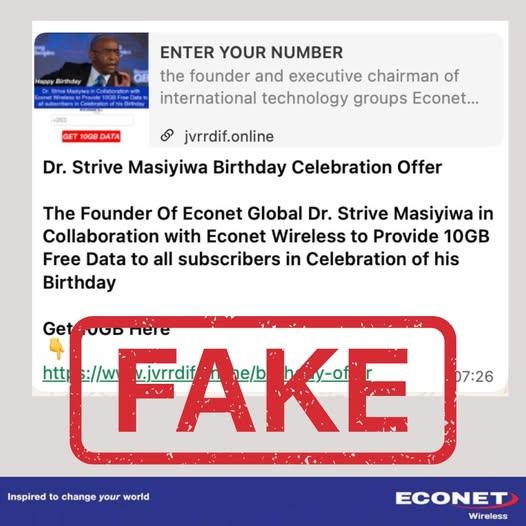
Others push “free data” promotions, claiming to celebrate anniversaries or special events. These often circulate rapidly in WhatsApp groups, with messages encouraging people to “share with 10 friends” before claiming the reward. In reality, these links are just harvesting personal information.
How to Protect Yourself
The good news is that avoiding these scams doesn’t require technical expertise. It comes down to a few simple habits.
Never share your EcoCash PIN or OTP with anyone, no matter how convincing they sound. No legitimate service will ever ask for this information.
Be cautious with links, especially those coming from ads or forwarded messages. If you need to access a service, type the official website yourself instead of clicking links.
Don’t trust a payment until you’ve confirmed it on your own device. For businesses, this means checking your EcoCash balance directly rather than relying on screenshots or SMS alerts.
And most importantly, pause before reacting. Scammers rely on urgency — the feeling that you might miss out. Taking a moment to think is often enough to spot the red flags.
The Bigger Picture
What’s happening now reflects a shift. As Zimbabwe becomes more reliant on mobile money, fraud is evolving alongside it. Scammers are no longer just sending random messages they are building systems, running ads, and targeting users at scale.
For many Zimbabweans, EcoCash remains an essential part of daily life. It powers everything from transport to groceries to school fees. But that convenience also makes it a valuable target.
The responsibility, unfortunately, is now shared. Service providers need to strengthen awareness and protections, platforms need to do more to filter malicious ads, and users need to stay alert.
Because in this new wave of scams, the biggest vulnerability isn’t the technology.
It’s trust.




Please login or create account to comment.