



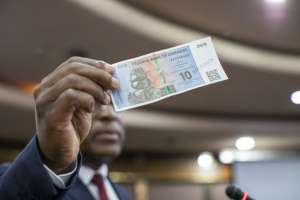
It has been a week since the introduction of ZiG, Zimbabwe's new currency, and the rollout hasn't been smooth.. The implementation of ZiG has presented numerous challenges for businesses, negatively impacting customers who were eager to make purchases using the new currency. While the initial plan was to complete the rollout for banks, public utilities, and telecommunication companies over the weekend, it did not go as smoothly as expected.
Since Friday, ZiG swipe machines have been out of service, leaving many unable to make purchases using ZiG even after their Zimbabwean Dollar (ZWL) balances were converted to the new currency. In the past few days, if you didn't have USD cash, you were unable to buy or access services such as ZESA tokens, government services, or local authority bills, which required the use of ZiG swipe machines. The lack of physical cash, which is anticipated to be available on April 30th, has added to the challenges faced by the people.

Nevertheless, there is gradual improvement as banks are steadily completing the transition and resuming ZiG Zimswitch purchases and bank transfers. Currently, 21 banks have rejoined the ZiG Zimswitch network, but one of Zimbabwe's largest banks, CBZ, is yet to do so. Zimswitch is the primary network responsible for handling transactions and communication between banks. It enables users to utilize any swipe machine with any bank card in Zimbabwe. It also handles interbank transfers. You can also withdraw cash from any Zimswitch registered ATM, regardless of the bank card used.
It is expected to encounter some hiccups during any system changeover, so it's advisable to anticipate problems when using ZiG swipe machines for purchases.
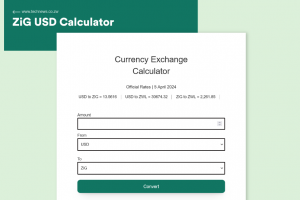
The official exchange rate for ZiG has slightly risen from 13.56 to 13.45, indicating a small gain in value against the USD. You can easily calculate ZiG to USD or ZWL using our ZiG exchange calculator at https://zig.technews.co.zw. . The full impact of ZiG on the exchange rate is yet to be felt in the economy, as transactions have not been fully processed due to banks transitioning their systems. The true effects will become evident when the entire economy fully adopts ZiG. ZiG is touted as a solution to combat the black market in Zimbabwe, and this claim will be put to the test once banks fully integrate ZiG and all services are up and running.
Many people have wondered if ZiG would be accepted for purchasing fuel and paying for government services that previously required USD payments. Unfortunately, similar to the Zimbabwe Dollar, ZiG will still not be able to buy fuel from service stations. This query was addressed in a Frequently Asked Questions (FAQ) release by the Reserve Bank of Zimbabwe (RBZ). Regarding government service payments, the Finance, Economic Development, and Investment Promotion Permanent Secretary, George Guvamatanga, stated that all government ministries, departments, and agencies will soon be required to accept ZiG payments. However, it remains to be seen if this includes passport payments, which are currently restricted to USD only.

EcoCash and Zimswitch (Zipit) have announced new transaction limits. For Zipit, the maximum amount you can send at a time is ZiG 2,400 (USD 177), and the monthly limit is ZiG 8,000 (USD 590). For EcoCash, the maximum amount you can send per transaction is ZiG 1,600 (USD 118), with a monthly limit of ZiG 2,400 (USD 177). When using EcoCash to make purchases from merchants, the maximum per transaction is ZiG 2,400 (USD 176), and the monthly limit is ZiG 8,000 (USD 590). The monthly limit means that once you exceed the set limit, you won't be able to engage in similar transactions for the remainder of the month. EcoCash previously had a monthly limit of 6 million ZWL (USD 176) for personal transactions and 20 million ZWL (USD 590) for merchants. Ecocash has just maintained the limits. These limits were initially imposed during the ZWL era to discourage trading of the currency on the forex black market. If ZiG manages to stabilize, it is expected that these limits will be increased to economically viable levels.


Please login or create account to comment.