


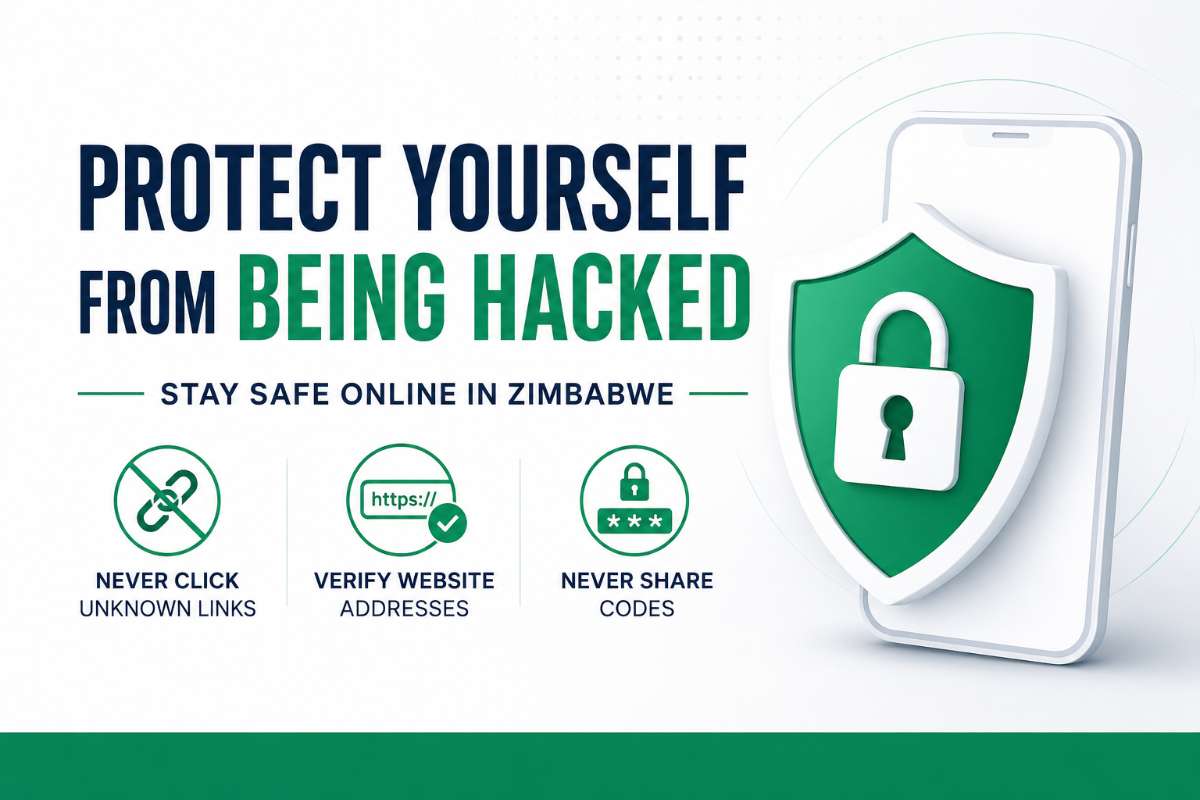
Every week, Zimbabweans lose access to their WhatsApp accounts, Facebook pages, bank accounts, and mobile money wallets. When this happens, many people say they were "hacked."
In reality, most cybercriminals are not breaking into accounts using advanced technology. Instead, they are convincing people to give away the information needed to access those accounts.
The good news is that protecting yourself online is often much simpler than many people think.
Never Click Unknown Links
One of the easiest ways criminals steal accounts is by sending links through WhatsApp, SMS, Facebook Messenger, or email.
These messages often create a sense of urgency. They may claim that:
- Your account will be suspended.
- You have won a prize.
- Your EcoCash account needs verification.
- A parcel is waiting for collection.
- A friend has sent you important information.
Before clicking any link, ask yourself whether you were expecting it.
Even if the message appears to come from a friend, be careful. Criminals frequently take over accounts and use them to send scam links to everyone in the victim's contact list.
If something seems unusual, contact the sender directly and verify that they actually sent the message.
Always Check The Website Address
Many scams rely on fake websites that look almost identical to legitimate ones.
A fake banking website may use a web address that closely resembles the real one. At first glance, most people would not notice the difference.
Before entering any password or personal information, carefully examine the website address shown in your browser.
Pay attention to:
- Misspellings in the domain name.
- Extra words or characters.
- Unusual extensions.
- Addresses that do not match the company's official website.
For example, if you are visiting a bank, mobile operator, or government website, ensure the web address exactly matches the official one.
A professional-looking website means nothing if the address is wrong.
Never Share Verification Codes
This is one of the most important rules on the internet.
If you receive a one-time password (OTP), verification code, or WhatsApp registration code, never share it with anyone.
Legitimate companies will never ask you to send them these codes through WhatsApp, SMS, email, or phone calls.
Criminals often attempt to log into your account and then contact you pretending to be customer support, a friend, or even a company representative.
They may say:
"Please send the code we just sent you so we can verify your account."
The moment you share that code, you may lose access to your account.
This scam is particularly common on WhatsApp. Criminals request a registration code, then trick the victim into forwarding it. Once they receive the code, they register the victim's WhatsApp account on their own device.
Remember: verification codes are for you only.
Enable Two-Factor Authentication
Many online services now offer two-factor authentication (2FA).
This adds an extra layer of protection by requiring a second form of verification in addition to your password.
On WhatsApp, enabling two-step verification creates a PIN that must be entered when registering the account on a new device.
Even if someone obtains your registration code, they will still need the PIN.
The few minutes spent setting up this feature can save you from losing your account.
Use Strong And Unique Passwords
Many people still use simple passwords such as:
- 123456
- password
- Zimbabwe123
- Their name
- Their phone number
These passwords are easy to guess.
A good password should be long, difficult to predict, and different for every important account.
If one account is compromised, criminals should not automatically gain access to all your other accounts.
If Something Feels Wrong, Stop
Cybercriminals rely on panic and urgency.
They want victims to act quickly without thinking.
Whenever you receive an unexpected request involving money, passwords, verification codes, or account information, pause and verify the request independently.
A few minutes of caution can prevent weeks of frustration.
The Bottom Line
The biggest cybersecurity threat facing most Zimbabweans today is not sophisticated hacking software. It is deception.
By avoiding unknown links, checking website addresses carefully, never sharing verification codes, enabling two-factor authentication, and staying alert to scams, you can dramatically reduce the chances of becoming a victim.
In many cases, protecting yourself online comes down to one simple principle: if someone is rushing you to click, share, or act immediately, take a moment to verify first.



Commenting is currently turned off.